According to National Geographic, “Storytelling is universal to the human experience. Indeed, although it is likely impossible to prove, it has been suggested that storytelling developed not long after the development of language itself.” When looking at our everyday life, we see storytelling in so many aspects of it, including when we communicate with our peers and in entertainment like TV shows, movies, or music.
An area of storytelling which I find particularly interesting is when it comes to sports. There are so many storylines and elements that can be used to tell stories. When going through it, finding different details in unexpected places was very intriguing. Some examples that stick out to me included the hidden letters and symbols in the Vegas Golden Knights and Seattle Kraken logos, the Houston-themed space imagery on the Astros’ City Connect jerseys, or the very detailed photorealistic gameday graphics created by the Carolina Hurricanes or the Florida Panthers. When looking into the details, it is very interesting to see the teams be able to shove all those details and meanings inside of everything.
In addition to the not-so-obvious ways, the sports broadcast always has some great stories. One of my favorites is when Alex Ovechican was chasing the NHL goal record. Both TNT and ESPN made this a super big deal and built this storyline between Alex Ovechican and the current goal-scoring leader, Wayne Greskey. The entire storyline was very interesting and really hooked viewers to the action.
Overall, storytelling is such an integral part of the human experience, and it is super interesting to see inside our everyday lives. Per Amplifi, “Utilize[ing] powerful pictures, videos, and other imagery [can] bring your story to life and your audience closer to your cause,” which is exactly why this is such an underrated part of sports storytelling. To read more about storytelling within sports, read More Than the Final Score: The Storytelling Behind Sports Media below:
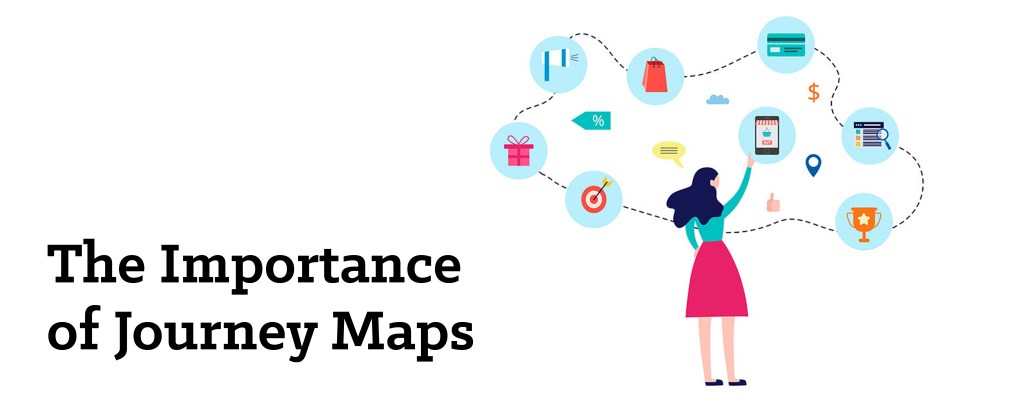
Journey maps are very important for companies to imagine the thought process behind consumers. According to Nielsen Norman Group, “In its most basic form, journey mapping starts by compiling a series of user actions into a timeline. Next, the timeline is fleshed out with user thoughts and emotions in order to create a narrative. This narrative is condensed and polished, ultimately leading to a visualization.” Looking at journey maps as a whole, it is very useful when it comes to understanding the process and mindset of a customer ordering a specific product.
In this example, I took the example of a college student ordering off of the Dunkin app before an early class and being able to pick it up before that. The journey map goes through the story of Morgan Rodriguez and her morning process. She has a few morning classes, and she orders coffee and food off the Dunkin app beforehand. It shows the process of her deciding she wants food, ordering and customizing it on the app, finalizing the purchase, and eventually picking it up from the Dunkin location. This truly shows the entire process behind a student ordering a meal.
Yale University talks about the benefits of a journey map, saying, “At a high level, journey maps are a combination of storytelling, visual design, and empathy. When completed, your project team will have a complete idea of how your users interact with your website or application and have clear definitions of your pain points. The process of creating a journey map allows your team to have an internal conversation and avoid any possibility of assumption misalignments.” This is really important not only for the company but also to break down the pain points in the process. If Dunkin sees it takes too long for a person to customize their order on the journey map, they might know to adjust that portion of the app. It is very important to take this feedback and develop the app or program to make it work better for consumers.
All in all, it’s very important for companies to take user experiences and develop them into something better that will make more people interact with the app. This example shows Dunkin, but it can really work for any company. Following what the customers want is crucial to making them happy with the product.
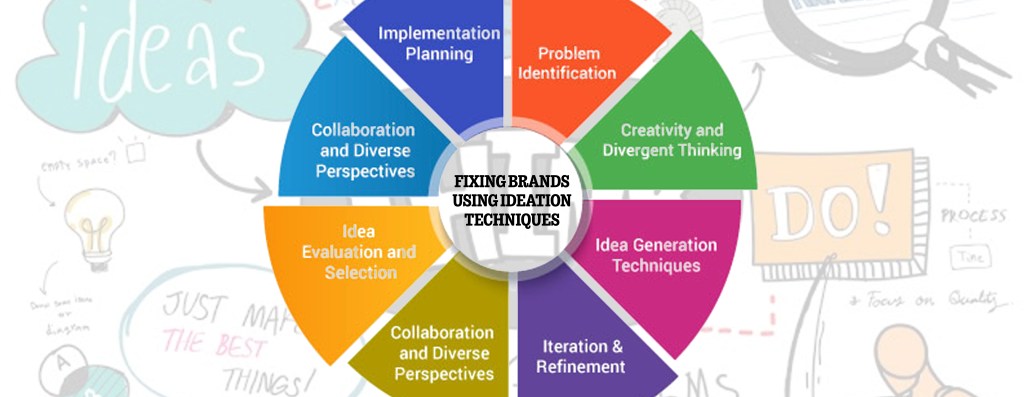
Ideation Techniques are a great way to generate a good quantity and quality of ideas that can help improve different aspects of a brand. According to An Introduction to Design Thinking Process Guide, “Ideation is the mode of the design process in which you concentrate on idea generation. Mentally it represents a process of “going wide” in terms of concepts and outcomes. Ideation provides both the fuel and also the source material for building prototypes and getting innovative solutions into the hands of your users.” This truly shows how important it is when it comes to creating ideas and eventually building on them. I was able to take point-of-view statements created for Instagram, Uber, and Dunkin and used 12 different techniques to improve on the ideas.
One of the most useful ideation techniques is when you rapid-fire ideas out. This can be found in Brainwriting, Worst Possible Idea, Gamestorming, Braindump, Bodystorm, and many other of the techniques. These are super useful, no matter if the ideas are good or bad or postive nor negative, as it just gives you the ability to release the ideas out of your head. From there, you can tweak them and make them more suitable for the specific concept. Psych Central says, “Proponents of brain dumping say that its benefits include: helping you remember what you need to accomplish each day, clearing up headspace to learn more information, organizing your thoughts, improving focus and concentration, increasing self-awareness of thoughts and feelings, may decrease stress.” These are all very beneficial when creating ideas.
In addition, being able to take ideas from other successful products, like in Analogies, was very useful and personally worked well for me. Being able to see what brands like Spotify, Netflix, and Amazon do and translating it back is really practical. I did this for Dunkin in my example and was able to realize that they could personalize promotions and offers on the home screen like Spotify and Netflix do, giving users the option to “Order your usual” like Amazon, and reward customers for frequently getting drinks/food from them as many airlines’ loyalty programs do.
All in all, using ideation techniques is very valuable when trying to develop and improve on design ideas. As Interaction Design Foundation put it, “There are literally hundreds of ideation techniques. Here we’ve provided you with an overview of the best techniques as well as when and why to use them. Due to the nature of ideation, it is extremely important to make use of techniques that match the type of ideas you’re trying to generate.” After going through all 21 concepts, they are super practical and make it easy to create quality concepts.
Technology is all around us and is something we use in our everyday life. From our phones, computers, and television to even some more niche items like kitchen appliances and cars, technology and, more importantly, screens are heavily integrated into our everyday lives. No matter what we do, there will always be some sort of screen or display for us to interact with.
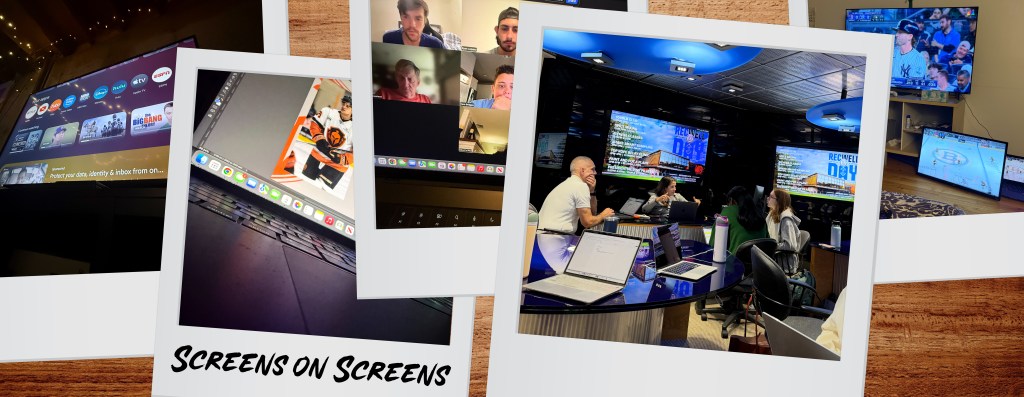
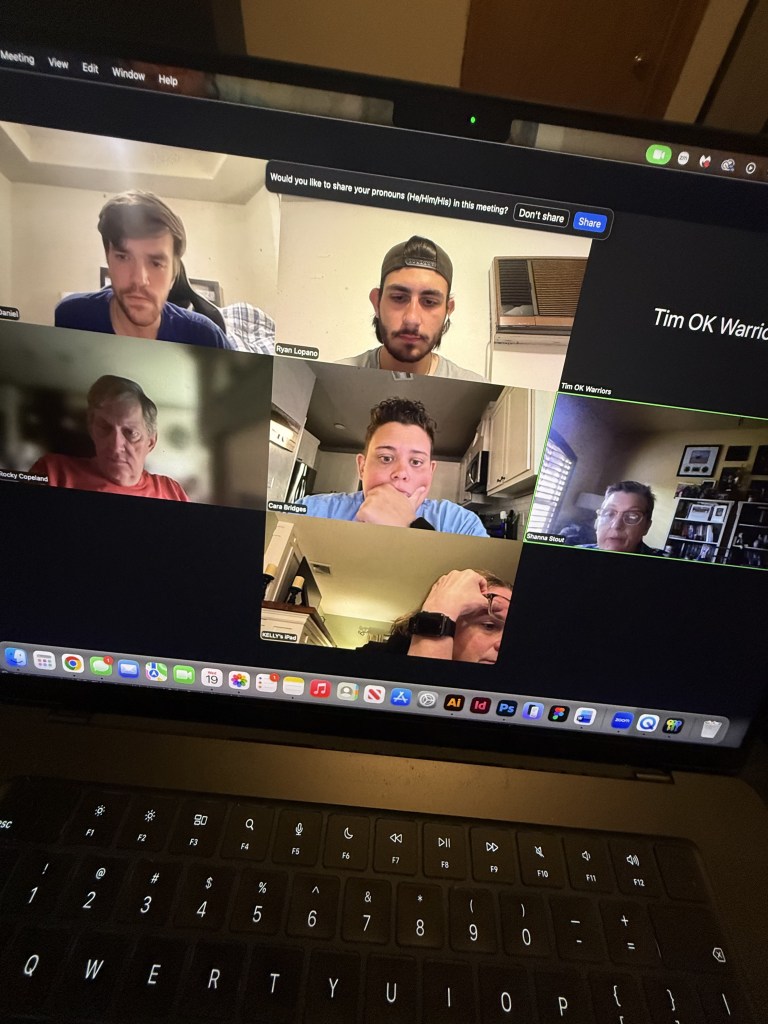
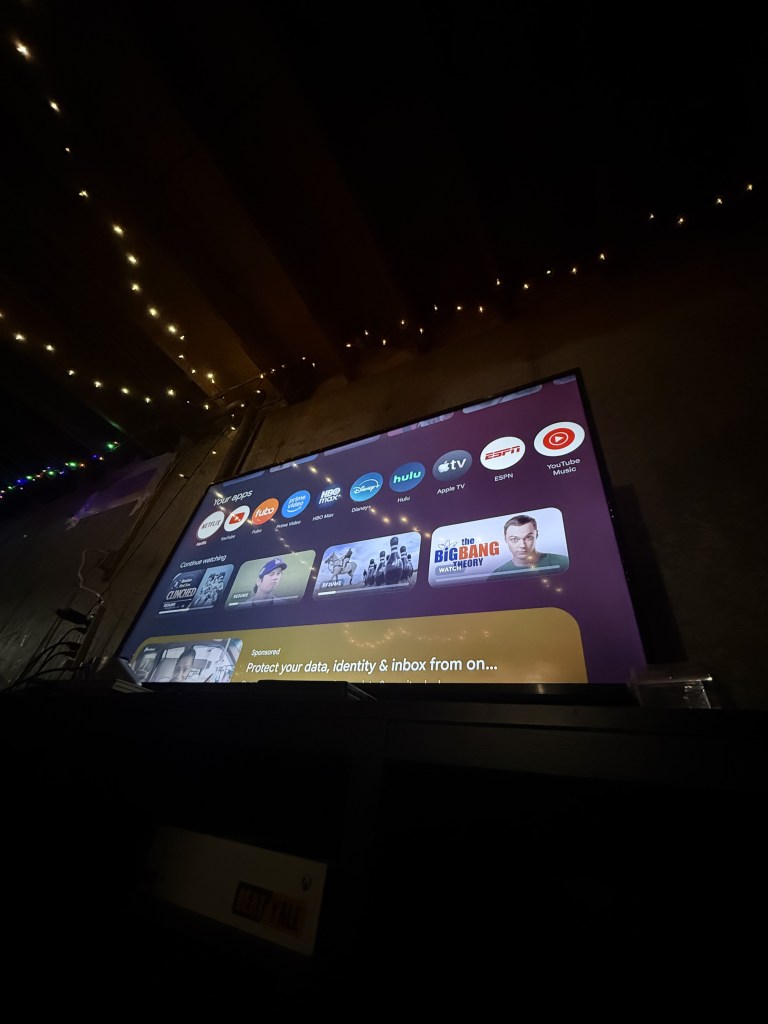
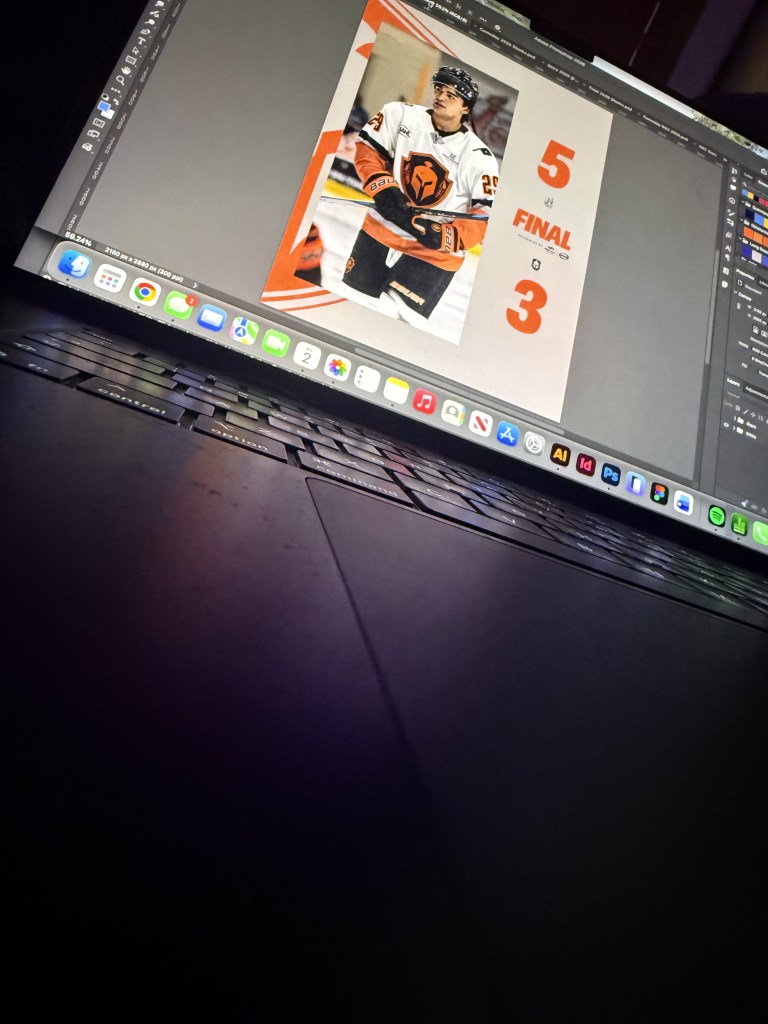
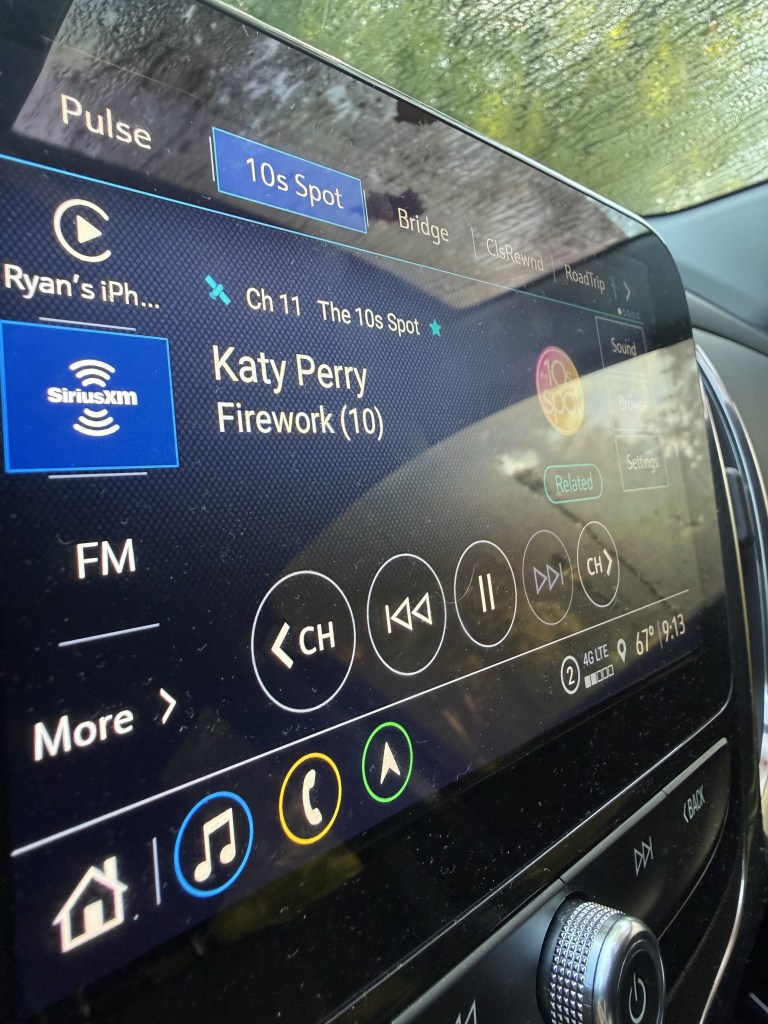
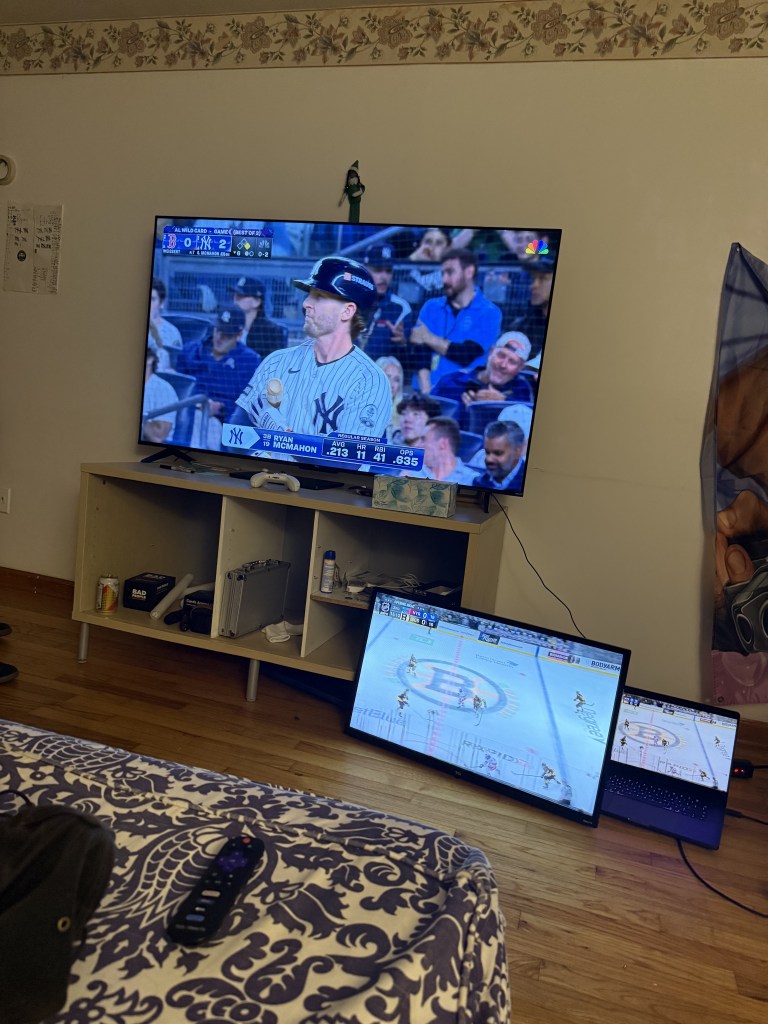
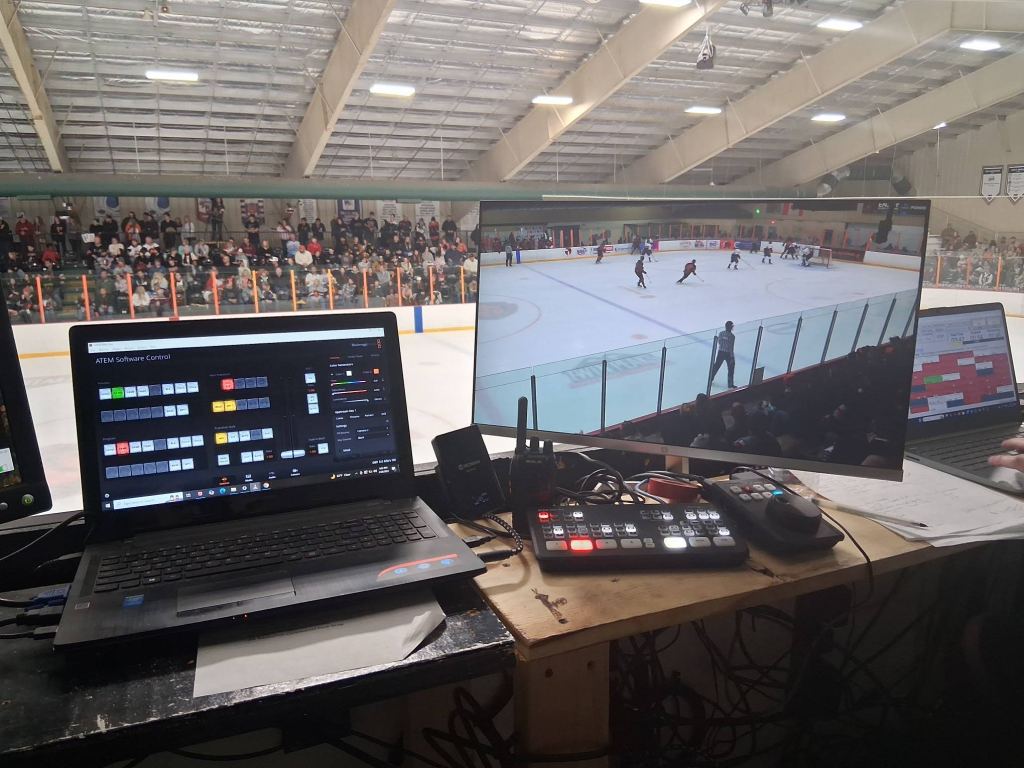
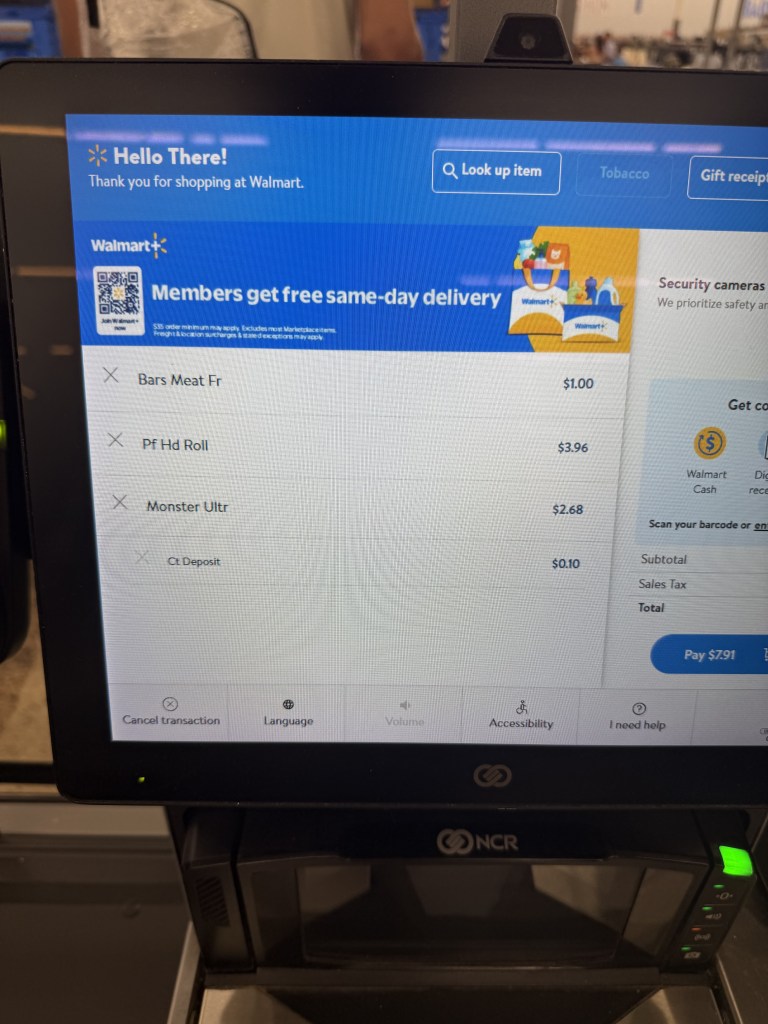
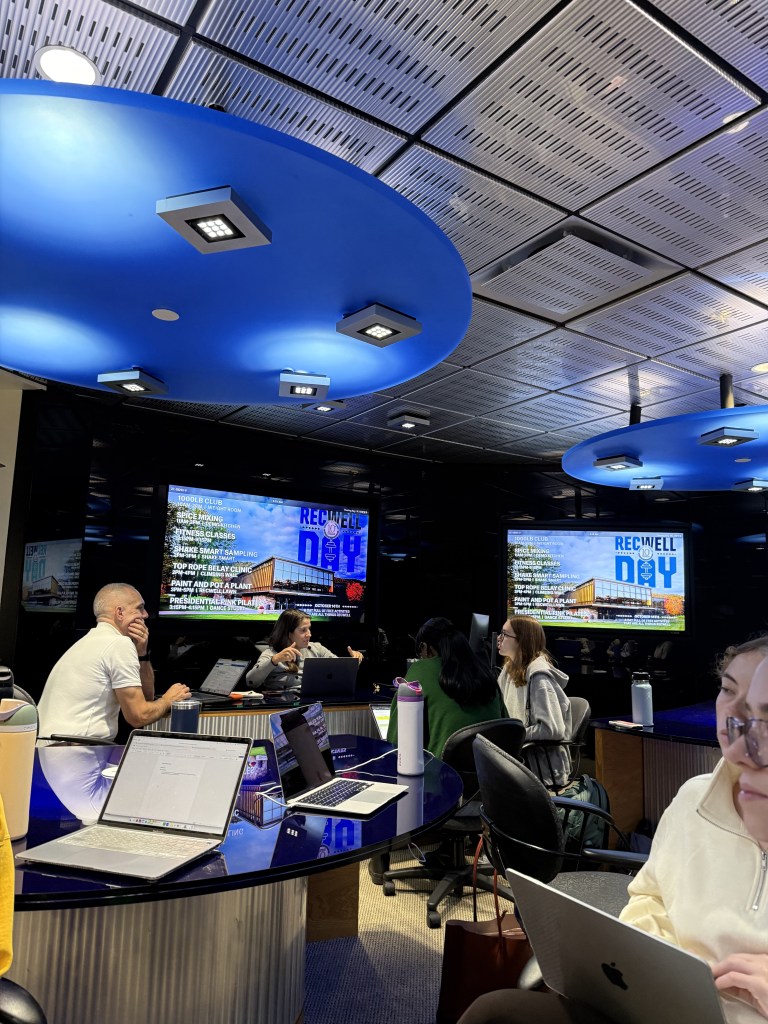
Work is inevitable, but now it involves screens more then ever. Meeting over systems like Zoom or Microsoft Teams makes it easier than ever to work remotly.Screens are perfect for entertainment. Being able to wind down and watch a movie or a TV show is the most relazing way to use technology.Work is never over. This perspective shows how prominent technology is in our lives.Even in our daily commute, screens are prominent. Cars have leaned heavily into the use of screens for simple machanics like the radio.Sometimes one screen isn’t enough. When big moments are happening, like sports, it gives way to have a second one playing even if it looks a tad ridiculous.Technology, the backend of how everything works. Online programs keep events like sports games running.Screens everywhere. Even in common grocery stores, we have screens being able to check a person out.The most daming thing in this frame is all the technology around. Ten different screens all around, showing how impactful they are in our every day life.
Technology is such a prominent part of our lives. Despite there being several major downsides, it seems like this is the way the future is. Being able to use screens responsibly is very important when carrying on and eventually building new technology.
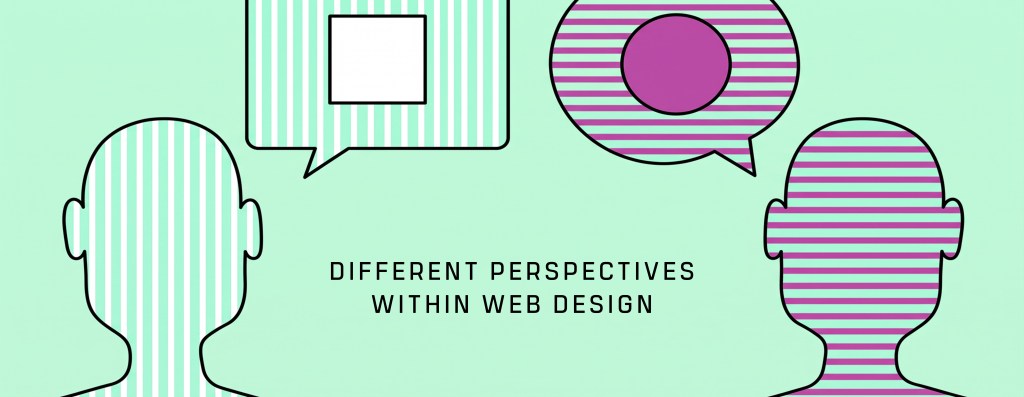
When designing apps for consumers, it is important that you take their feedback into mind when making edits. Different users may use apps in different ways, so being able to understand a variety of perspectives is very valuable when working in user Interface and user experience design. According to Yale University, “By observing users as they complete tasks, you can uncover usability issues, validate design choices, and reduce costly mistakes before launch. Whether you’re testing early prototypes or live features, user testing gives you clear, evidence-based insights that drive better design and a smoother user experience.” The whole act of user testing is very important, no matter what area of design. I work in social media sports design, and I get several opinions on graphics before publishing to see how different people perceive them.
When it comes to app design, reviews are very important. Developers are able to get real feedback from the people who actually use the app and can update it based on both positive and negative reviews. When looking at two major apps, Instagram, Uber, and Dunkin, it was very clear to see that this feedback was very useful. Comments such as how the machinery app works, how the user uses the app, and when and where an app can be improved were all valuable things I saw written in the review section of the App Store. Some of the best examples of these can be found below:
“Love the app, but there’s an issue with the drop-downs for each section when there’s more than 5-6 options (e.g., Dairy, Unsweetened Flavors, Sweetened Flavors). Some of the options further down in the list are partially selectable but not fully visible, such as Protein Milk, Butter Pecan, etc. Recommend making these scrollable sections within the page. Thanks, Dunkin!”
“Favorite of the social media available by far. However, there are flaws such as not being able to see people who’ve unfollowed you/ people you follow that don’t follow you back, the “all” message button that, without permission, forces you to look at messages you’ve deliberately put on the restricted list, not being able to save story drafts consistently, etc.”
Something that was very respectable that I noticed is that Dunkin went back and responded to mostly all of the reviews left on their app. This is a very nice gesture the brand makes to connect back to their consumers. This right here just shows how important it is to take user information and feedback and translate it back. By taking this information, it can only help improve the app and make it easier for consumers and the brand alike.
When creating websites, it is important to target the design to the people actually using the website. According to Harvard’s Business School, “Target audience refers to the group of consumers most likely interested in your products or services, who should be the focus of your marketing campaign.” To help when building a website, professionals create personas to figure out the goals, motivations, reasoning, and frustrations that are likely to come from their target audience.
I think a great example of a persona is myself, funny enough. In the spring, my friends and I are planning to go to Costa Rica and are actively using Airbnb to book our trip. Going through the process of finding different places, comparing them to other places, talking with my group, and repeating is a very accurate part of the entire booking process, and I tried to reflect that in the actual persona. Airbnb definitely makes it easy to find different places, but it is interesting to see how the experiences match up.
This is the entire reason for the persona, so the people at Airbnb can see who is viewing their site, how they are using it, and what they are looking for. They can take this very valuable information and reflect it back into the design of the website or the marketing they do. Airbnb itself talks about their competitors and how they stand out, saying, “Others in the hospitality industry have also noted this trend, and we are flattered that those in the travel sector who were once skeptical of home sharing now seek to replicate the Airbnb model. Many traditional hospitality companies and the organizations they fund have resisted home sharing, spending millions of dollars to campaign against people sharing their homes. We are gratified to see these organizations now acknowledge that home sharing is an acceptable, and for many, preferred way to travel. While they were against it before, they are for it; it is better to arrive late than never arrive at all.” This information is very important when it comes to the users of the website and when and how they plan on using the site.
Understanding how people act and behave around certain things is very important when it comes to designing. When you take the psychological and economic sides of it, you can view it through the lens of behavioral economics. According to the University of Chicago, “Behavioral economics combines elements of economics and psychology to understand how and why people behave the way they do in the real world. It differs from neoclassical economics, which assumes that most people have well-defined preferences and make well-informed, self-interested decisions based on those preferences.” Because these studies show why people do things, marketers can use specific tricks that influence the way people perceive brands and perceive things.
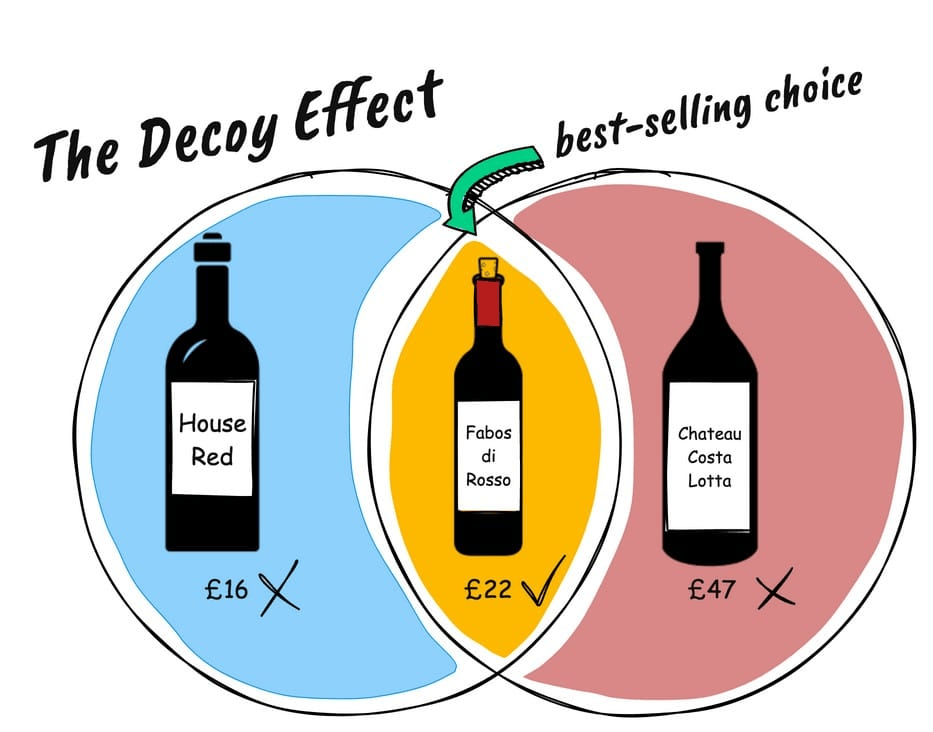
The biggest trick I’ve seen used is the Decoy Effect. This is where you put a third option between two options to make the more expensive option look more worth it. Coffee chains like Dunkin and Starbucks do this trick to encourage consumers to buy a larger drink. At Starbucks, a 12 oz tall is about $4.91, a 16 oz grande is about $5.47, and the 20 oz venti is about $6.02. They place the price of the middle item closer to the more expensive one to entice you to spend more. They give you the option to choose, despite not wanting you to choose it. Dunkin is the exact same way, having their 10 oz smalls costing $2.55, 14 oz mediums being $2.89, 20 oz larges costing $3.09, and a 24 oz extra large being $3.29. Not only do coffee shops use this effect, but so many other businesses utilize it as well. For example, movie theaters with popcorn, restaurants with food, and carriers with phone plans.
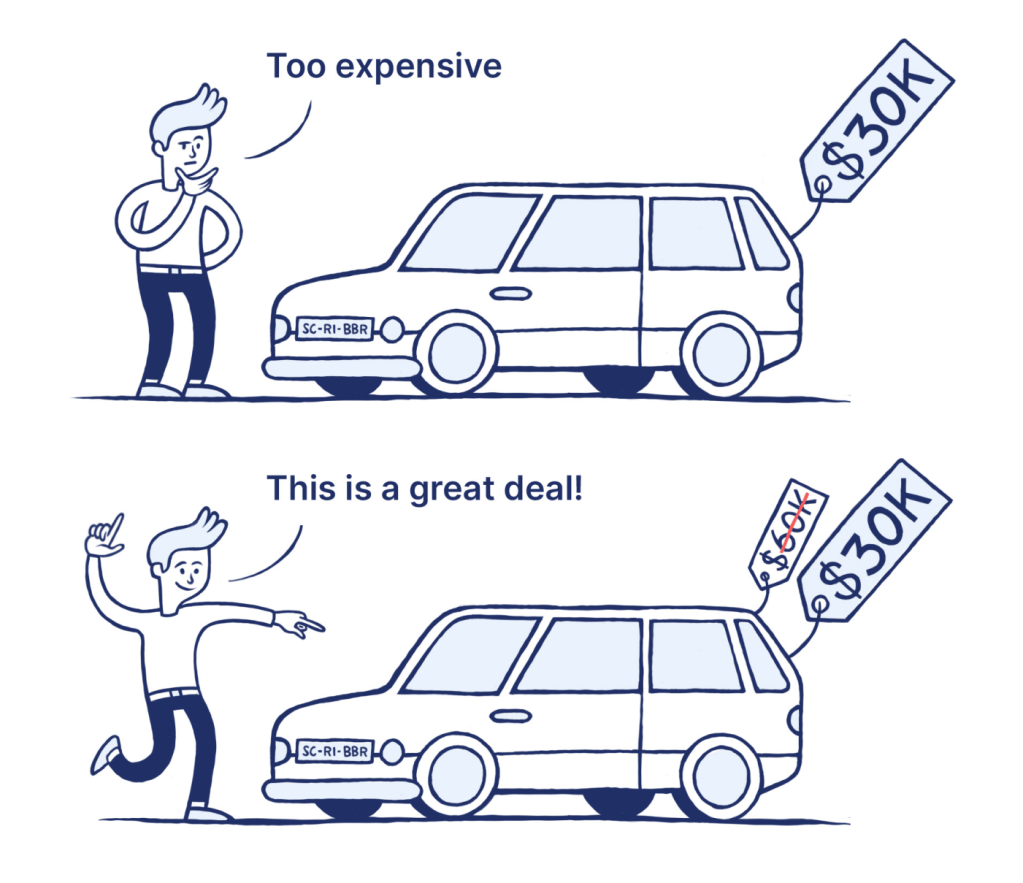
Another effect used heavily is the Anchoring Effect. This is where a retailer shows an item being on sale to entice people to buy it. If you see an outfit that is on sale for 70 dollars that used to be $120, you’d be more willing to buy it than if it was originally just $70. This makes you think it is worth more than what you are actually buying it for, regardless of whether the sale is true or not. Harvard Law School says, “Especially in negotiations around price, the party who makes the first offer often gets the lion’s share of the value. That can be due to the anchoring effect, or the tendency for the first offer to “anchor” the bargaining that follows in its direction, even if the offer recipient thinks the offer is out of line,” about the Anchoring Effect. They also talk about different times the effect has been used, like when the Women’s National Basketball Association was trying to renegotiate their contracts.
Overall, understanding behavioral economics is very important when marketing to people. Having tricks like the Decoy Effect or the Anchoring Effect can very well help businesses when trying to make consumers buy their products or services.
If I told you to close your eyes and think of Walt Disney World, what do you think of? You start to start seeing the rides and characters, smell the popcorn and other treats, and hear the iconic music within the Disney catalogue. The reason you are so quickly able to jump your mind to that place is that it is so recognizable. Even just seeing a photo from the place brings you there. This is the entire point of immersion and the experience economy as a whole. According to EHL Insights, “In this framework, the memory itself becomes the product. While goods are tangible and services are intangible, experiences are memorable. A lasting memory and the positive feelings associated with it can be worth so much more to a brand, especially when analyzing metrics such as lifetime value (LTV) and customer evangelism rates.” The whole point is taking a normal experience and elevating it by enhancing the experience.
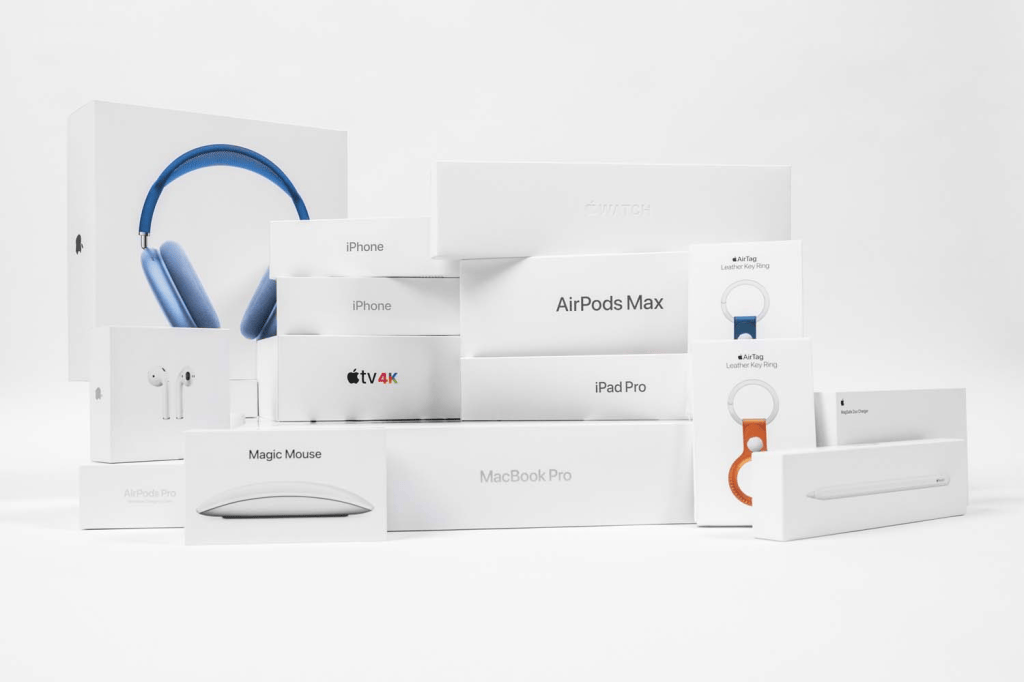
Apple
On a smaller scale than Disney, Apple does a fantastic job at this. Buying an iPhone or any other Apple product is much more memorable than just buying it. The sleek packaging of Apple makes it instantly recognizable and makes the entire process seem high quality. In addition, having high-quality packaging makes Apple seem more trustworthy to consumers compared to other cheaper brands. I bet you have an old iPhone box saved somewhere (I know I do). According to a study by 9 to 5 Mac, 28.8% of consumers keep their Apple boxes forever, and 59.5% keep them until they get a new iPhone. Why do we save them? It’s not like we are going to use it. It’s because it seems high quality, and it reminds you of going back to the time that you bought the tech product.
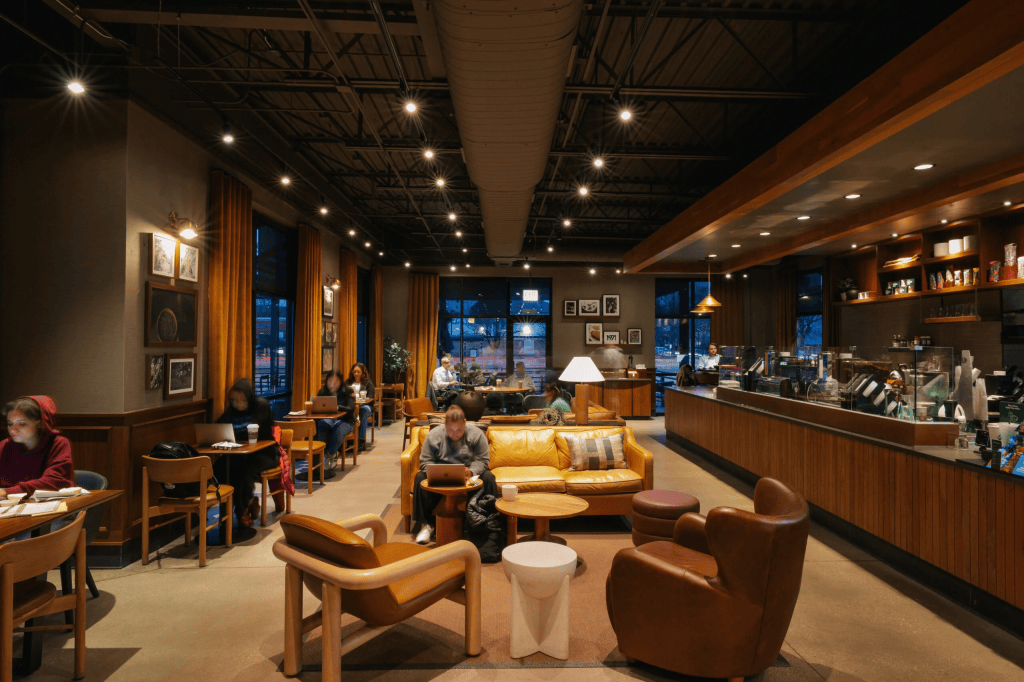
Starbucks
Another great example of the experience economy is Starbucks. Obviously, people go to Starbucks for coffee and food, but it’s more than just that. The entire atmispher or the coffee brand is perfectly crafted to feel warm and cozy. In the words of Starbucks itself, “Starbucks has always been a special place to gather and connect. We’re woven into the communities we serve. Our coffeehouses are gathering spaces for conversations, connection and joy, where our Green Apron baristas deliver expertly handcrafted beverages, make meaningful connections with their communities and deliver that much-needed pick-me-up to start your day, customized how you want. Our promise to our customers is to uplift the everyday, every time you visit us.” The fact that one mini paragraph written by the brand can instantly describe the look and feel perfectly shows how important the atmosphere and experiences are. And when the experience is that well liked by consumers, then they will do whatever they can to go to said brand. This is why Starbucks can get away with charging a good amount more than its competitors. It’s all about the experience.
Sports Games
My favorite type of experience would be sports games, specifically, to me, hockey games. The whole idea of a sports game, from before the game starts to the time you’re back home, is carefully crafted. The feeling of going into the stadium with thousands of other fans who have the same interests is really cool. And in some instances, fans tailgate outside of the arena, which also builds to the experience. For me, it really comes together when you sit down in your seat. The visuals from the scoreboard, the light show and intros, the national anthem, and then the game starts. All of it comes together to hype you up for the game ahead. This all comes together to build the experience and make it special. Obviously you can watch the game at home, but there’s something about seeing it live. I would say I have the exact same experience when it comes to concerts. Seeing both live is truly incredible and are definitly top memories in my mind.
All in all, the atmosphere and the experience as a whole are so crucial when it comes to the experience economy. Building a strong and recognizable experience is so important when designing for a brand and really makes them stand out.
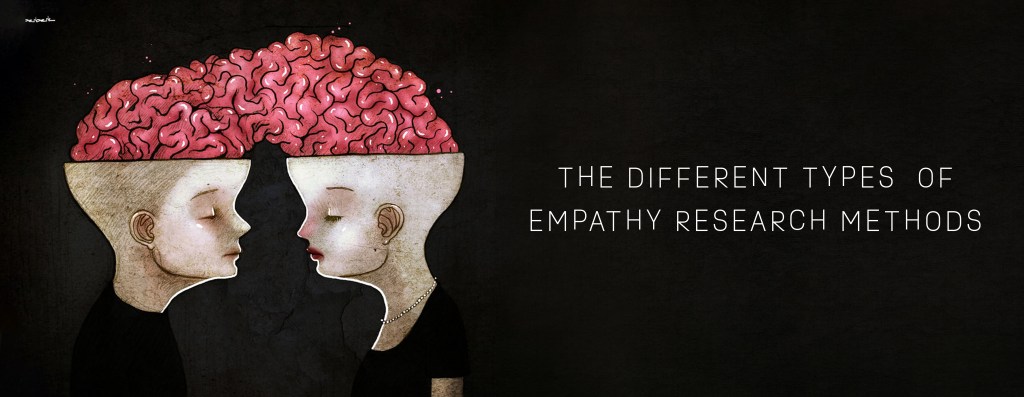
Empathy research methods are really important for designers in order to understand customers’ emotions when they are interacting with different things. Ale Wiecek describes, “These research methods are designed to allow researchers to first be an observer, to gather enough information on the problems they are exploring, before making assumptions. It reinforces the importance of understanding a problem or experience from the customer/user’s perspective, rather than our own.” This is very important when it comes to designers, as it is their job to develop products and overall solutions that bode positively for users.
What I view as one of the most effective empathy research methods is the “ask what–how–why.” This is pretty self-explanatory, and that’s why I think it works so well. All it truly requires is watching someone do a task and trying to understand it. This is shown in the name, as you can ask what they are doing, how it works, and why that is the case. This is useful for designers, as it helps researchers look beyond obvious behavior and design products and solutions based around them. This is why user testing is so important, as it uses processes such as asking what, how, and why.
Something that I view as something useful is personal photo and video journals. Being able to capture both photography and videography and being able to learn from it is very helpful, especially when designing. As someone with 40,573 photos and videos on my phone, it’s pretty clear that I use this strategy quite a bit. This is especially useful for visual learners, as you can physically see whatever is being photographed or videoed. In addition, it also improves the accuracy of the information, as you will physically be able to see everything.
One method that I’ve used at Quinnipiac University is creating journey maps. A journey map visually shows different stages that a person goes through during any sort of experience. Jounry maps are really good specifically for finding out pain points, highs and lows, holes in the experience, and any other opportunities for improvement. All of these are good to help progress a design.
Overall, all these methods work in various different ways and help reinforce the importance of understanding a problem. These three methods have worked countless times in order to find information from the client and eventually execute the solution.