The Bare Bones Camera Course for Film and Video – Chapter Eight: Sound
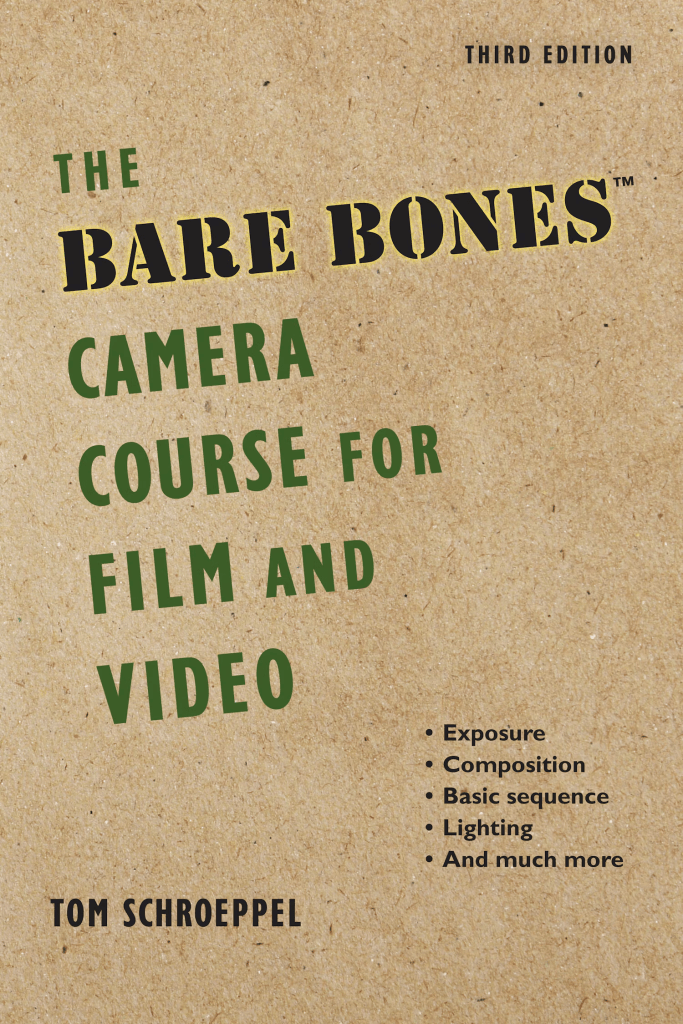
Chapter Eight of The Bare Bones Camera Course for Film and Video discusses the importance of sound when it comes to media. It specifically focuses on how sound is actually recorded and how it is used in film and other video production.
It goes into the science side of sound, explaining the basics of how sound waves work and microphones. This includes how sound travels and how different recording environments can affect the final audio recording and the importance of picking the right microphone.
The chapter also talks about recording “clean sound”, the importance of capturing sound effects, and recording voices overall. It talks about how background noise, echoes in the room, and/or poor microphone placement can make voices difficult to understand. A way to combat this is to record extra sounds separately, as they can help make the scene more complete when editing.
The biggest takeaways I got from the chapter are that the sound design should be planned just as carefully as visuals. Especially because there won’t be visuals for my podcast, this means the sounds design is crucial to nail. Techniques like recording my voice clearly, choosing a quiet location to record, and using quality background music and intentionally ambience sounds is very important. For my podcast, sounds like footsteps or distant conversations can help establish that college setting, but in that same vein, they should not distract from the overall message.
How to Write an Invisible Script
This article by Kevin Anderson talks about how to write a natural and conversational podcast script instead of something that sounds like someone just reading from a document. He mentions that planning the podcast episode with bullet points is a good way to do this.
It also shows the importance of a clear structure in a podcast episode. The opening hook should grab the attention of the audience and explain to them what the episode or series will be about. The middle will be the meat of the episode, where you give the listener valuable information based on your topic. “Depending on the length of your show, you might have 3-5 key waypoints to guide your listener through the story your podcasting is telling. Keep the flow sequential in nature” (The Podcast Host). This is followed by the ending, which should briefly recap the main ideas of the entire podcast episode.
Another important point Anderson brings up is to write your script the way you naturally speak. This, like short sentences, everyday language, and a conversational tone, will help the audience feel actually connected to the host. This is something that is especially important when it comes to my podcast, as I want it to sound like a natural conversation rather than something too professional or scripted.
Podcast Scripting: How Do I Write a Podcast Script?
This piece by Colin Gray discusses three angles when it comes to writing a podcast script: writing every word, creating a detailed outline, or using a flexible list of bullet points. This is a bit different from the advice given in the previous article but could be benifical depending on the topic of the podcast itself. Each of the three methods has its own pros and cons depending on the host and their experience.
A full script could be beneficial to help the host cover all the important topics and information, but it can take longer to prepare ahead of time and may sound more monotone when read aloud. A detailed outline is the best of both worlds, as it provides both preparation and flexibility. The final of the three is rough bullet points, which can sound more conversational.
The main lesson of this article is that there isn’t a correct way to go about scripting a podcast. “Whatever method you choose is perfectly fine. As I said, it’s a really personal choice, and you’ll find one you prefer with a little experimentation” (The Podcast Host). For my project, I’m using bullet points as it will lead to a more casual sound, which should relate back to my audience. Despite this, I will still plan what I plan on talking about and any other quotes or other information I plan on using.
Hooks, Taglines, and the Power of Words
This reading by Kevin Anderson talks about the importance of a podcast’s title, tagline, and opening hook, and how to make them more memorable. The title and tagline are meant to represent the show’s identity, while the hook gives listeners a reason to pay attention and want to stay and listen. Both should communicate the podcast’s purpose without making the intro unnecessarily complicated.
It later explains that effective taglines are short and to the point, which leads to something that is easy to remember. A strong introduction should show off the host, explain what both the show and episode are about, and tell listeners what they will expect from listening.
For my podcast, On Campus: College Experiences Dissected, the tagline “College Experiences Dissected” establishes the initial topic, but the tagline will be used to draw the audience’s attention. Starting with a relatable situation about friendships or social media is meant to make listeners feel connected to the subject.
Tools for Podcast Planning Perfection
This article by Matthew McLean mentions the tools and resources that are used to make podcast planning easier. He talks about how producing a podcast involves more than just recording audio and the importance of pre-production. Podcast creators need to organize their ideas, develop a plan for the episode, choose and set up recording equipment, and manage production.
The main message is that planning tools should be used to help creators spend less time worrying about the technical side and to allow the host more time to develop the content. Having an organized process is crucial to take an idea from the initial stages to eventually leading to a fully finished and fleshed-out episode.
This relates back to my project as it reinforces the importance of creating a clear outline beforehand. I have planned my sections out, organized my information, and connected my personal stories back to the topic at hand.
How to Present a Perfectly Scripted Podcast
This resource, written by Robert Cudmore, talks about the importance of delivering a confident and clear podcast sound. Good writing alone isn’t enough to lead to a quality episode, as the host’s pacing, tone, pronunciation, and overall delivery are very important when it comes to how the audience experiences the actual episode. If the podcast doesn’t audibly sound good or interesting, no one will want to listen to it.
It recommends using short notes and bullet points instead of using a fully written-out script that the host would read out word-for-word. It also talks about practicing before recording, as it will lead to a better overall product. “The more familiar you are with your notes, the easier it’ll be to convey them in your own words. A good thing to practice is to do a dry run, bouncing off your notes to see how it sounds before you hit Record. (The Podcast Host)” You can see which vocal delivery is appropriate and overall be able to speak at a more comfortable pace. These techniques help the host sound more conversational and prevent the episode from feeling too robotic.
This is especially helpful for my podcast because the topic is about personal experiences. I want listeners to feel that I am talking to them directly so they can imagine the scenarios in their eyes. Practicing the script and leaving room for natural pauses will help me say the information without sounding like I’m reading off a script.
Twenty Thousand Hertz
This podcast talks about different stories behind recognizable sounds in both entertainment and technology fields. They do an excellent job of using sound effects, music, and narration to make audio itself the focus of the story.

It does a good job of demonstrating how sounds can be more than just something to fill silence. For my podcast, simple sounds like footsteps, distant conversations, or subtle transition sounds can help the listener imagine being on a college campus.
99% Invisible
99% Invisible explores the design and architecture behind different things that people often overlook. The topic alone is super interesting to me, who looks at things through a design eye all the time. It uses narration, interviews, and carefully chosen sound to explain the subjects in a way that is super interesting.

I chose this, as it demonstrates how a simple topic can be broken down into a defined story rather than presented as a list of straight facts. I can use the same approach in my podcast with the stories, connecting them back to the related issue and explaining them.
Radiolab
Radiolab by WNYC Studios combines different elements, such as interviews, narration, music, and sound effects, to make complicated ideas much easier to follow along with. In addition, it uses sound design in a major way as a way to tell their stories.
I like how they use sound to help communicate a feeling or emphasize the important points of the story or lesson. For my podcast, I plan on using subtle music and campus ambience to help the listener understand the setting and get engaged without feeling overwhelmed.
Heavyweight
This podcast is about revisiting unresolved moments from real people’s pasts, often having to do with relationships, regret, and/or difficult conversations.
I chose it as it shows how an audio project can be used to relate back to people’s emotions. This is somewhat what I’m looking to do with my podcast, as my stories are supposed to give listeners a perspective they might not already have, just like the Heavyweight podcast gives people a new perspective into their lives.
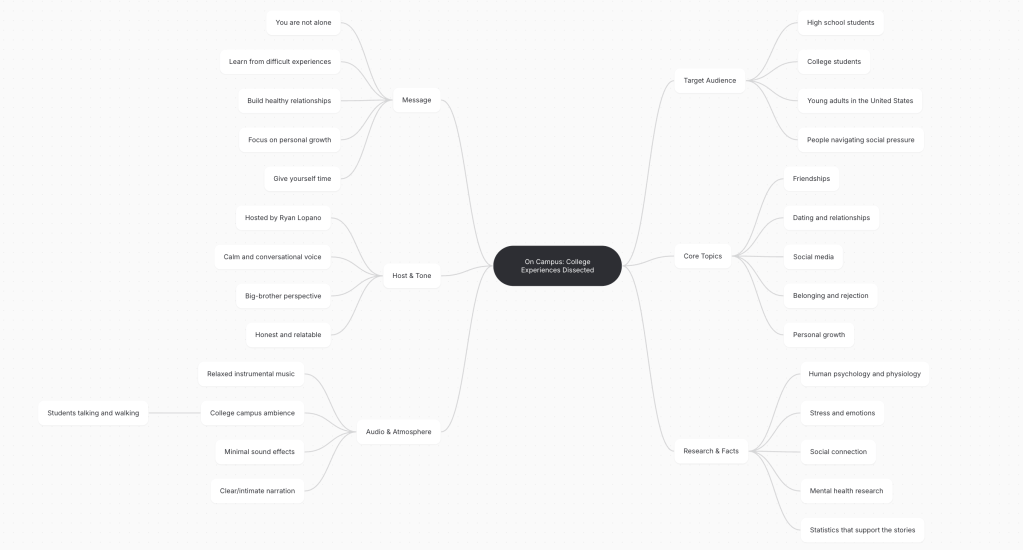
Mind Map


Leave a Reply