Understanding how people act and behave around certain things is very important when it comes to designing. When you take the psychological and economic sides of it, you can view it through the lens of behavioral economics. According to the University of Chicago, “Behavioral economics combines elements of economics and psychology to understand how and why people behave the way they do in the real world. It differs from neoclassical economics, which assumes that most people have well-defined preferences and make well-informed, self-interested decisions based on those preferences.” Because these studies show why people do things, marketers can use specific tricks that influence the way people perceive brands and perceive things.
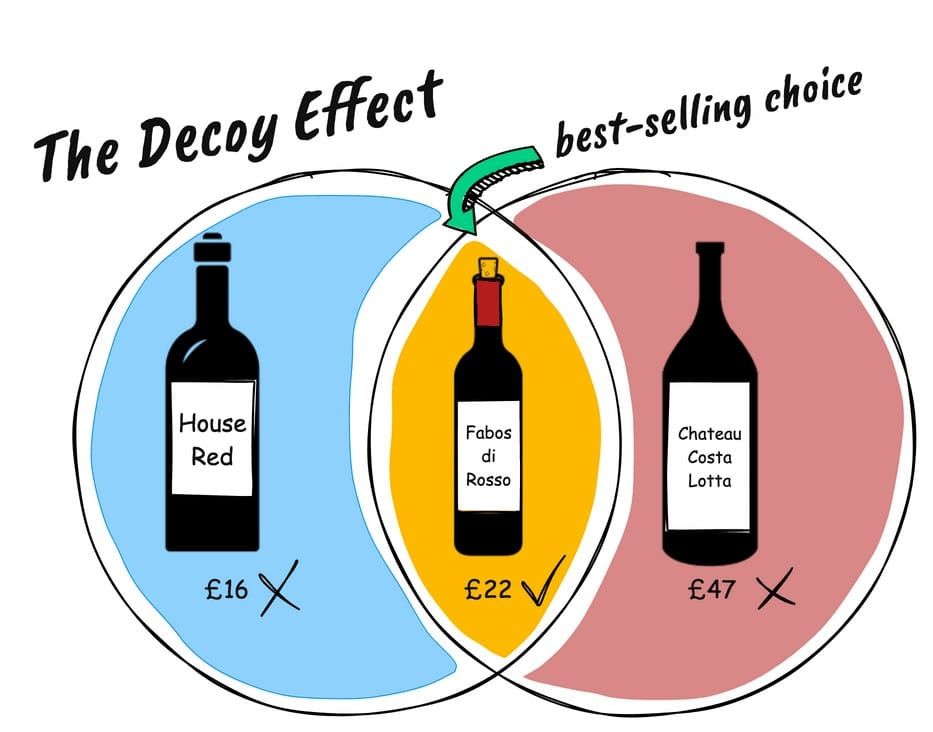
The biggest trick I’ve seen used is the Decoy Effect. This is where you put a third option between two options to make the more expensive option look more worth it. Coffee chains like Dunkin and Starbucks do this trick to encourage consumers to buy a larger drink. At Starbucks, a 12 oz tall is about $4.91, a 16 oz grande is about $5.47, and the 20 oz venti is about $6.02. They place the price of the middle item closer to the more expensive one to entice you to spend more. They give you the option to choose, despite not wanting you to choose it. Dunkin is the exact same way, having their 10 oz smalls costing $2.55, 14 oz mediums being $2.89, 20 oz larges costing $3.09, and a 24 oz extra large being $3.29. Not only do coffee shops use this effect, but so many other businesses utilize it as well. For example, movie theaters with popcorn, restaurants with food, and carriers with phone plans.
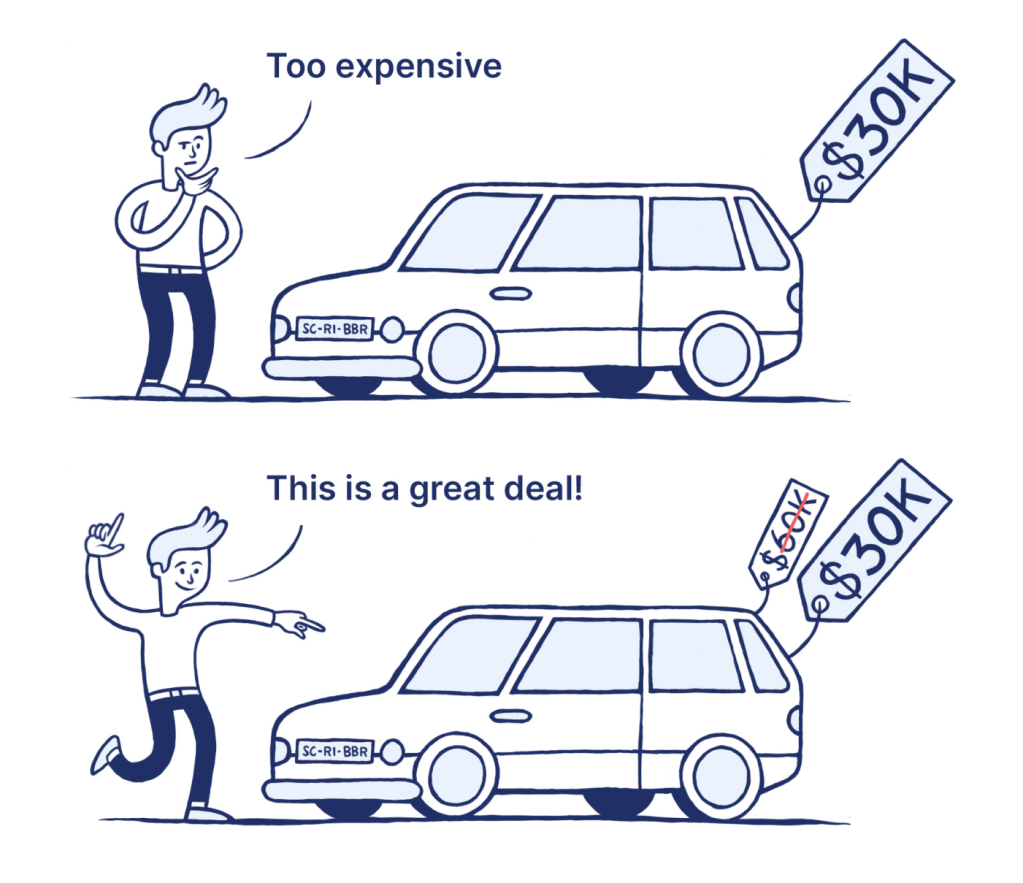
Another effect used heavily is the Anchoring Effect. This is where a retailer shows an item being on sale to entice people to buy it. If you see an outfit that is on sale for 70 dollars that used to be $120, you’d be more willing to buy it than if it was originally just $70. This makes you think it is worth more than what you are actually buying it for, regardless of whether the sale is true or not. Harvard Law School says, “Especially in negotiations around price, the party who makes the first offer often gets the lion’s share of the value. That can be due to the anchoring effect, or the tendency for the first offer to “anchor” the bargaining that follows in its direction, even if the offer recipient thinks the offer is out of line,” about the Anchoring Effect. They also talk about different times the effect has been used, like when the Women’s National Basketball Association was trying to renegotiate their contracts.
Overall, understanding behavioral economics is very important when marketing to people. Having tricks like the Decoy Effect or the Anchoring Effect can very well help businesses when trying to make consumers buy their products or services.


Leave a Reply